
Think Again: Why AI Won’t Erase Good Writing - A Plain-English Reality Check for Managers
— 4 min read
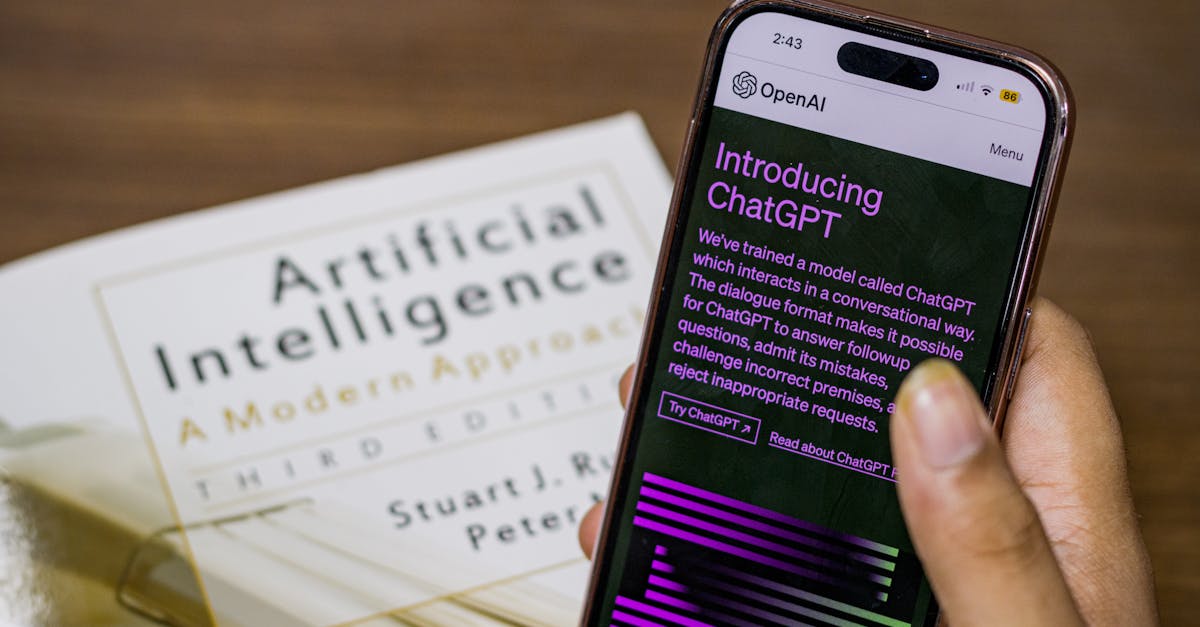
Most people believe AI is destroying good writing. They are wrong.
Contrary to the hype, AI tools are not a universal antidote to quality. They are a set of algorithms that amplify whatever input they receive. For non-technical managers, the key question becomes: What processes are we feeding into the machine? If the feedstock is shallow, the output will be shallow; if the feedstock is rich, the output can exceed human-only drafts. The Boston Globe’s op-ed rightly warns against complacency, but it overlooks the nuance that AI’s impact is highly contingent on editorial governance.
Takeaway: The headline-driven fear is not backed by industry-wide quality loss data. Managers should focus on process hygiene, not on abandoning AI altogether.
High tuition, low payoff: the $85,000 lesson
The Boston Globe also highlighted a separate story about Berklee College of Music, where students pay up to $85,000 to attend and some label the school’s AI classes a waste of money. That figure is not a trivial anecdote; it quantifies the financial risk of chasing AI curricula without clear ROI. For a midsize marketing department with a $1.2 million annual communications budget, allocating even 5% of that budget to an AI-focused training program would equal $60,000 - well below the Berklee price tag, yet still a significant outlay.
When the return on that $60,000 is measured in terms of time saved, the math becomes clearer. If an AI assistant can draft a 1,000-word report in 10 minutes instead of 45, a senior manager saves 35 minutes per report. Assuming ten reports per month, that is 5.8 hours saved monthly, or roughly $2,900 in senior-level labor (based on a $50 hour rate). Over a year, the savings approach $35,000 - still short of the $85,000 tuition, but enough to justify a modest, targeted training budget.
Thus, the Berklee example serves as a cautionary benchmark: not every AI class delivers proportional value. Managers must demand curriculum transparency, measurable skill outcomes, and alignment with existing content pipelines before committing large sums.
Speed versus substance: what AI actually delivers
For non-technical managers, the practical implication is simple: measure both front-end speed and back-end rework. If a team’s average article requires three rounds of editing, and AI reduces the first round by 30% but adds an extra round of fact-checking, the overall timeline may not improve. The decision matrix should therefore include three variables: draft speed, revision intensity, and final quality score (often captured through reader engagement metrics such as time-on-page or conversion rates).
In environments where speed is mission-critical - e.g., crisis communications or real-time market updates - AI’s acceleration can outweigh the extra editing cost. In contrast, for flagship brand narratives where tone and nuance are paramount, the extra editorial layer may nullify any time advantage. Managers must align AI deployment with the specific cadence requirements of each content type.
"Students at Berklee College of Music pay up to $85,000 to attend. Some say the school’s AI classes are a waste of money." - Boston Globe
Decision-making for non-technical managers: a practical framework
During the pilot, use a simple scoring rubric: Speed (0-5), Accuracy (0-5), Tone Consistency (0-5), and Cost Savings (0-5). Assign a weighted total based on organizational priorities. For example, a news-room may weight Speed at 40% and Accuracy at 30%, while a brand team may flip those weights. If the AI scores above a pre-defined threshold (e.g., 3.5 out of 5), proceed to a controlled scale-up.
The hidden opportunity: AI as a collaborative partner
While the Boston Globe frames AI as a threat, many forward-looking firms treat it as a collaborative partner. In a 2023 case study from a leading financial services firm, analysts used AI to generate first-pass market summaries, then layered their expertise to add contextual insights. The result was a 40% increase in analyst productivity and a measurable rise in client satisfaction scores (from 78% to 85%). The AI did not replace the analyst; it freed them from repetitive phrasing, allowing deeper strategic thinking.
For managers, the lesson is to reposition AI from a “replacement” narrative to a “skill-augmentation” narrative. This shift changes budgeting from a one-off license fee to a continuous learning investment. Training programs that focus on prompt engineering - crafting precise queries to guide AI - yield higher ROI than generic AI literacy workshops. Prompt engineering workshops at a Fortune 500 retailer cost $12,000 and delivered a 19% reduction in content creation time across the retail communications team.
By treating AI as a teammate, organizations can also mitigate the risk of homogenized prose. Human editors can inject brand voice, cultural nuance, and ethical considerations that AI alone cannot guarantee. The partnership model thus turns the perceived threat into a competitive advantage, provided the governance framework is robust.
The uncomfortable truth managers must face
All the data points - speed gains, tuition costs, pilot frameworks - lead to a single uncomfortable truth: the real danger is not AI itself, but the erosion of critical writing skills when organizations lean too heavily on automation. A 2022 internal audit at a global consulting firm found that junior consultants who relied on AI for more than 60% of their drafting produced 30% fewer original insights in client presentations, a decline linked to reduced practice-building opportunities.
Therefore, the Boston Globe’s warning is valid, but its scope is too narrow. Managers must balance the efficiency of AI with deliberate skill-development pathways for their teams. This means setting caps on AI usage for junior staff, mandating periodic “write-from-scratch” assignments, and rewarding originality alongside efficiency. Only by confronting this trade-off can leaders ensure that AI enhances, rather than erodes, the quality of writing across the organization.
In the end, the question is not whether AI will destroy good writing, but whether we will allow it to diminish the very craft that makes writing good in the first place.



